
Camera Driver Development
Image Quality Tuning
Custom Camera Engineering
Custom Lens Engineering
Ready-to-integrate camera drivers for Raspberry Pi, NVIDIA, ST, and more. Get your camera module up and running fast on the platform you’re already working with.
Fine-tuned image quality for your exact use case. We calibrate ISP parameters, color accuracy, noise reduction, and HDR to get the best out of your sensor, in any lighting condition.
A camera module built around your product, not around a catalog. From sensor selection and board layout to interface and mechanics, every stage is engineered to your size, performance, and environmental requirements.
Optics designed for the exact image you need to capture. From field of view and aperture to resolution and distortion, we design and qualify the lens to hold its targets across your full operating range.
Expert Image Quality (IQ) Tuning as a Service
End-to-end ISP calibration and pipeline tuning to extract the highest visual performance and accuracy for your embedded vision and AI systems.
What is Image Quality (IQ) Tuning?
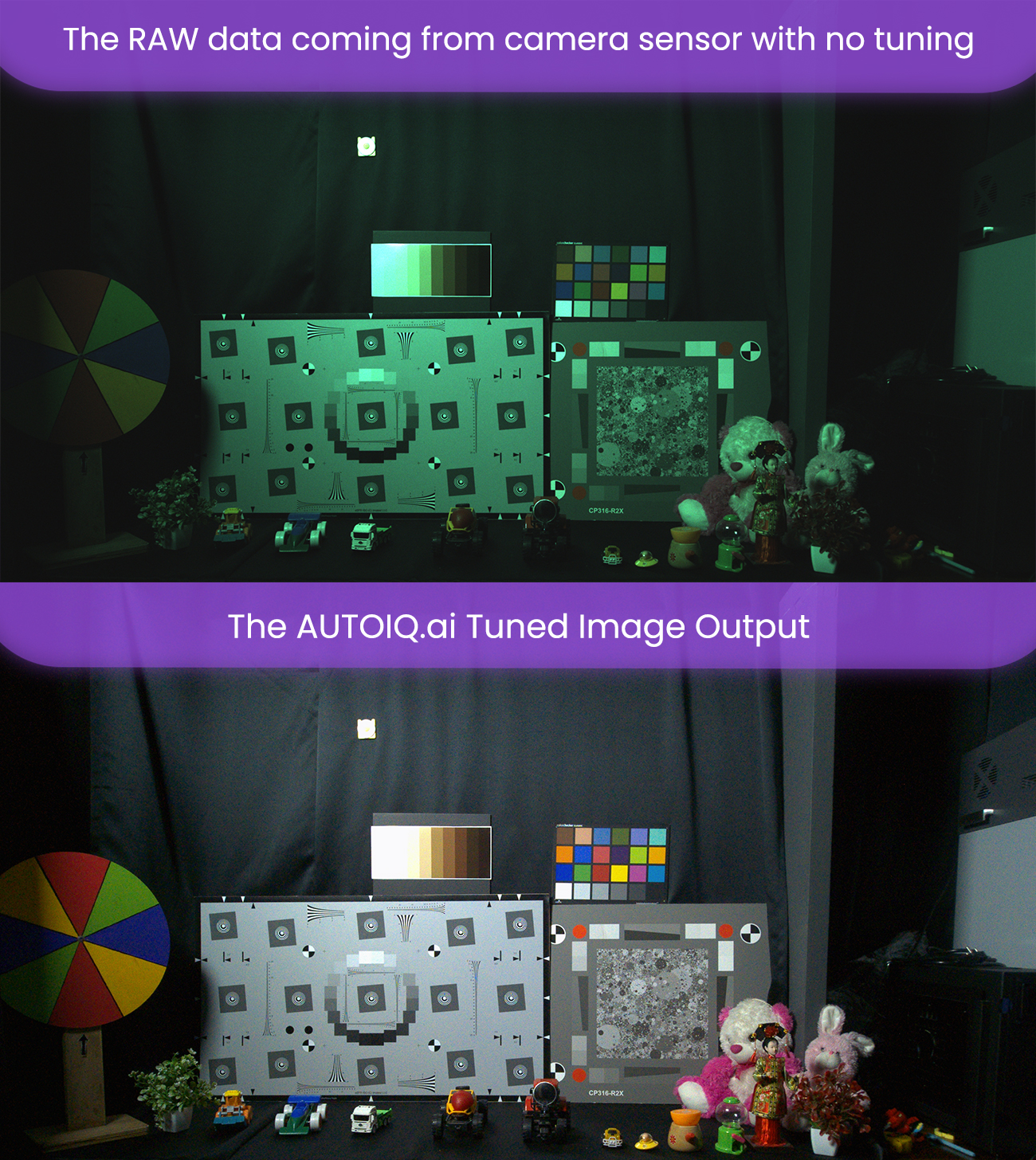
A high-quality image requires much more than just high resolution, brightness, or basic sharpness. Image Quality (IQ) Tuning is the meticulous process of calibrating an entire camera system—including the sensor, lens, and firmware—so it can accurately reproduce a scene across a variety of challenging lighting environments.
Whether capturing footage in stark sunlight, dim indoor environments, or complete darkness, proper IQ tuning prevents the loss of critical details and minimizes image noise, delivering realistic and reliable vision data for downstream processing.
The Core Components of ISP Tuning
The Image Signal Processor (ISP) is the heart of your camera pipeline. To achieve superior image quality, the pipeline must be fine-tuned by configuring each individual ISP block to respond appropriately to dynamic lighting situations. Because ISP blocks are highly interdependent, a step-by-step calibration and tuning process is critical; a miscalibration early in the pipeline will cause subsequent blocks to suffer, degrading the final output.
Our comprehensive ISP tuning service covers the full spectrum of:
Objective Image Quality Tuning
We calculate fundamental camera parameters—such as black level, defective pixels, lens shading, white balance, color correction matrix, and noise models—to establish highly accurate baseline settings for the ISP and achieve target KPIs for a given use-case.
3A Algorithm Tuning
We deliver precise tuning for Auto-Exposure (AE) for tonal range & well exposedness, Auto-White Balance (AWB) for varying illuminants, and Auto-Focus (AF) to ensure reliable focus and sharpness regardless of the environment for the specific use-case.
Subjective Evaluation & Fine-Tuning
By capturing and analyzing real-life scenes, we identify and fix nuanced quality gaps. We rigorously test for natural colorfulness, aliasing, moiré patterns, sharpening artifacts, and specific details like text readability to accommodate your exact scene requirements.
Our Tuning Architecture
We specialize in bringing up camera hardware and optimizing driver stacks on industry-leading embedded platforms such as but not limited to Renesas, ST, Infineon, NVIDIA, Qualcomm, SiMa.ai, AMD, TI, NXP etc.
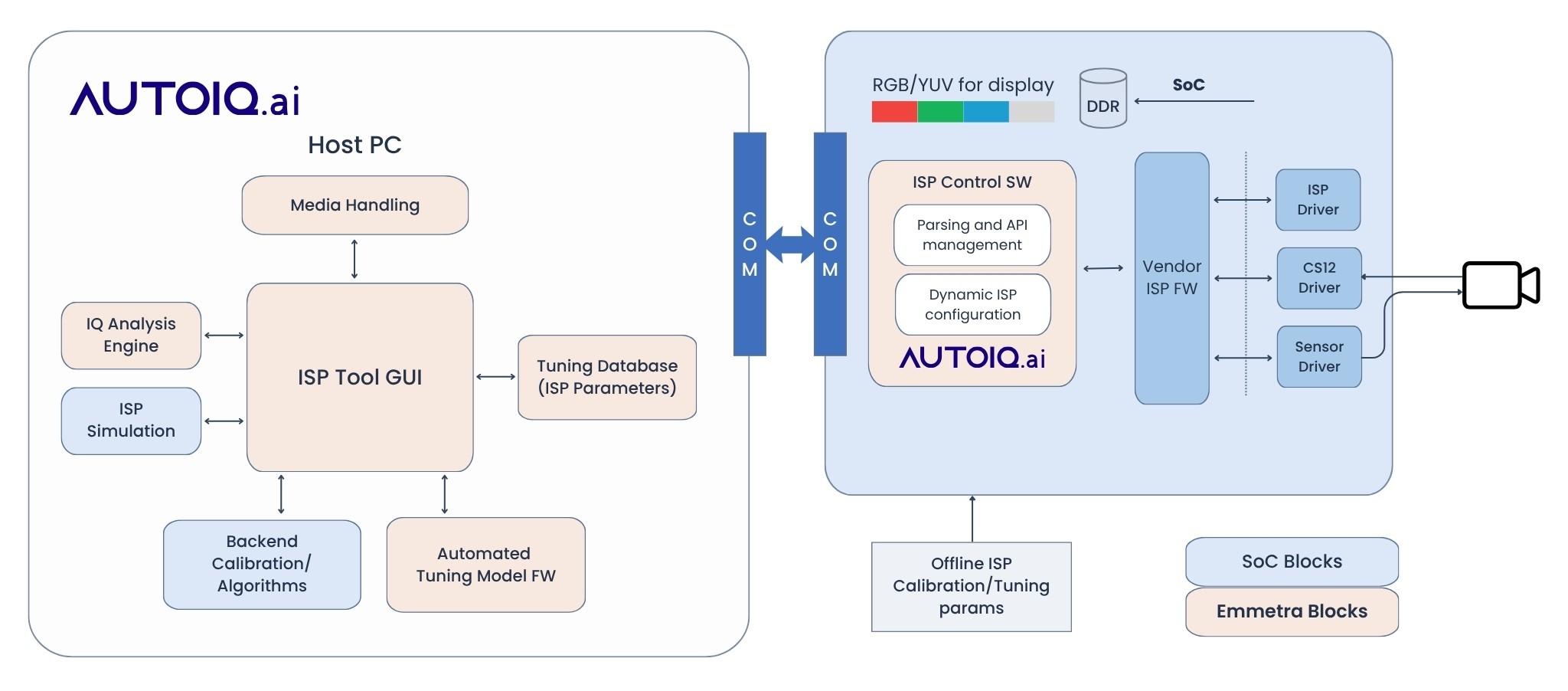
As detailed in the AUTOIQ.ai Architecture powered by Emmetra, our tuning architecture bridges advanced analysis tools directly with target SoC:
- Host PC Environment: Features an advanced IQ analysis engine, a centralized tuning database, and an intuitive ISP Tool GUI. This is
- powered by backend calibration algorithms and an Automated Tuning Model framework.
- Direct SoC Integration: The host communicates seamlessly via COM or ethernet interfaces to the target SoC. On the SoC side, the ISP Control SW handles API parsing and dynamic ISP configuration.
- Hardware-Level Execution: Tuned parameters interface directly with the Vendor ISP Firmware, Sensor Drivers, and CSI-2 Drivers. This unified workflow outputs highly optimized RGB/YUV data tailored specifically for your display or computer vision applications.
Supported SoC Ecosystems
We provide out-of-the-box calibration and tuning calibration for industry-leading edge AI platforms using AUTOIQ.ai:
Renesas: Vision AI RZ/V series such as RZ/V2N, RZ/V2H,V2L and the RZ/G3E.
NXP: i.MX95 and i.MX8M Plus MPU SoCs.
STMicroelectronics: STM32MP257 and STM32N6 Platform Series.
TI’s Sitara platform series – Sitara such as AM62A and TDA4x
ISP tuning (traditional method) is as well supported for NVIDIA, AMD, Btree, Qualcomm, Synaptics, Verisilicon, SiMa.ai, Realtek, Mediatek, Ingenic etc SoCs.
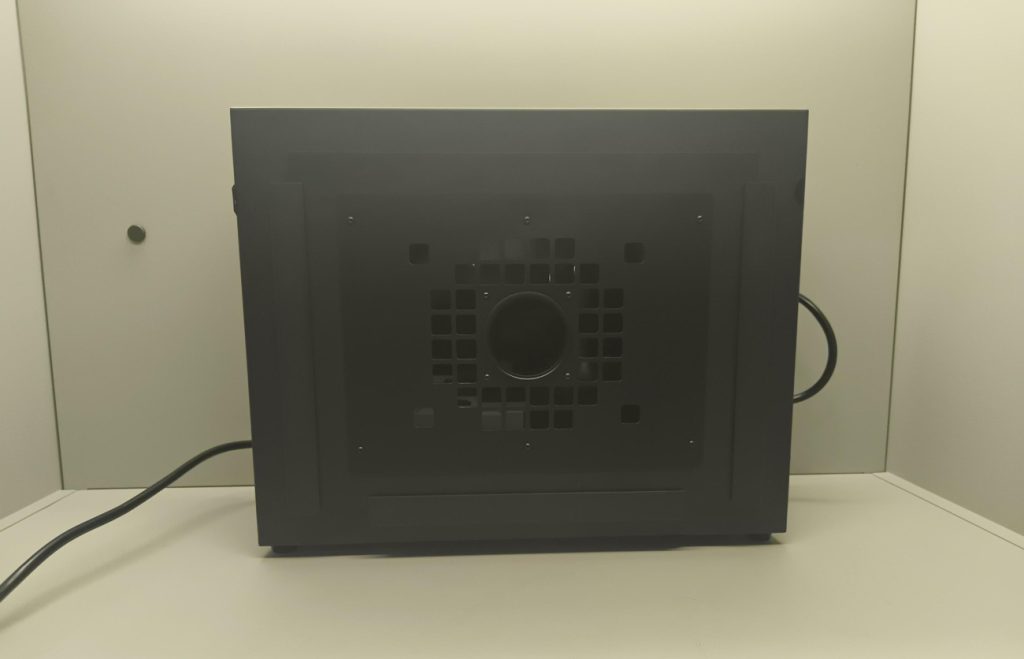
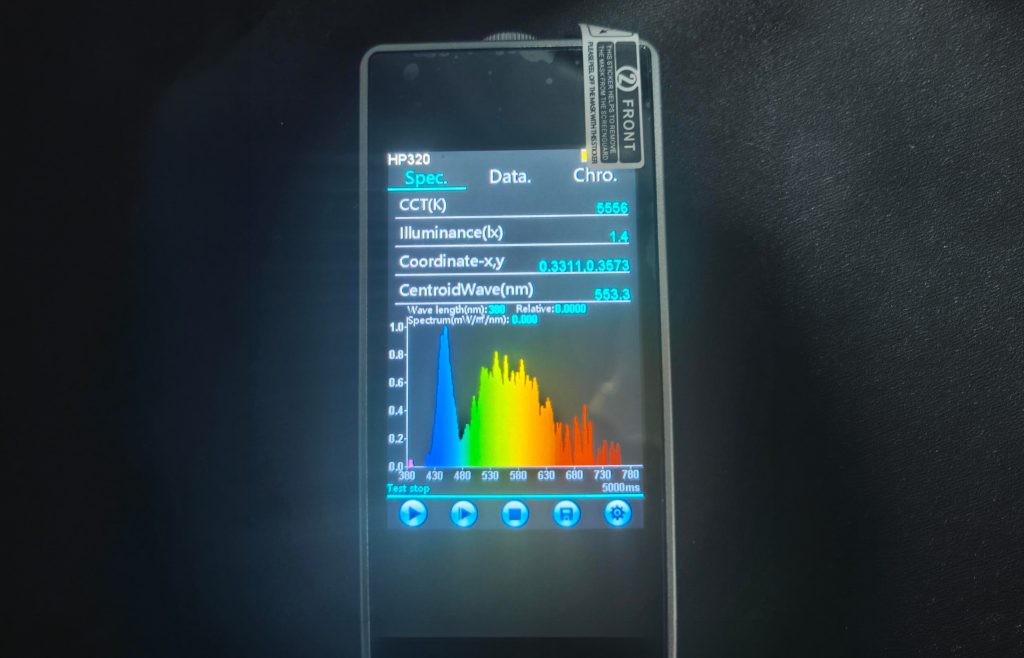
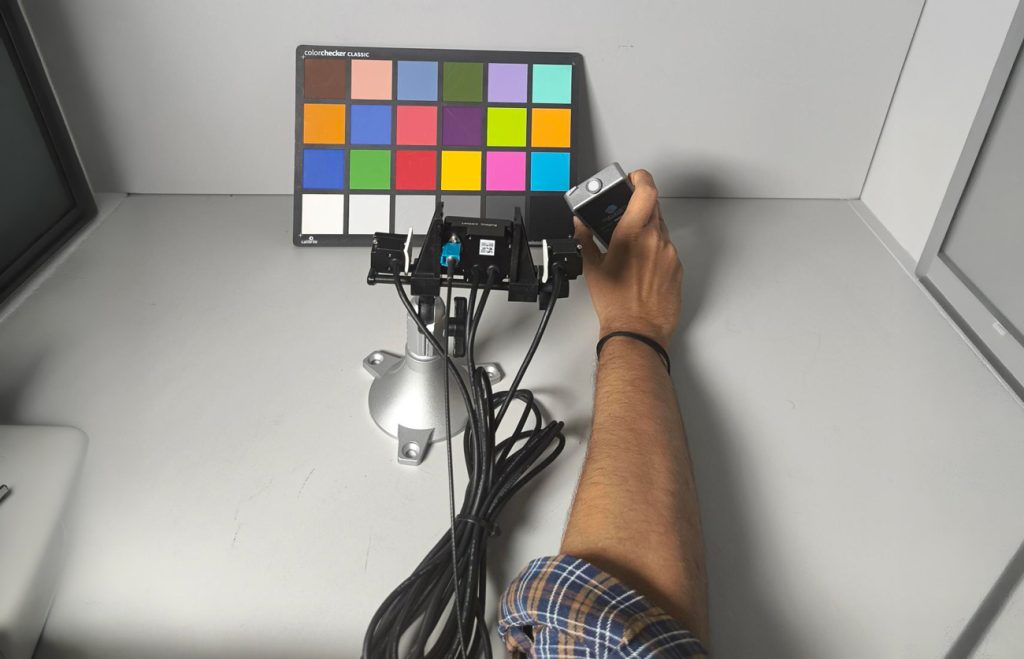
State-of-the-Art Calibration and Tuning Infrastructure
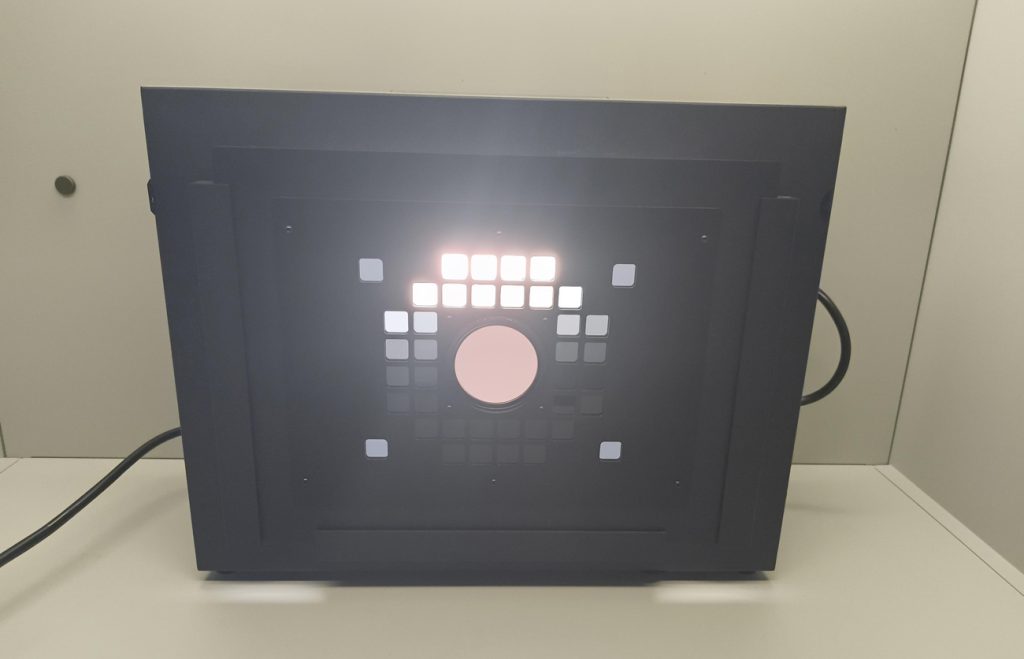
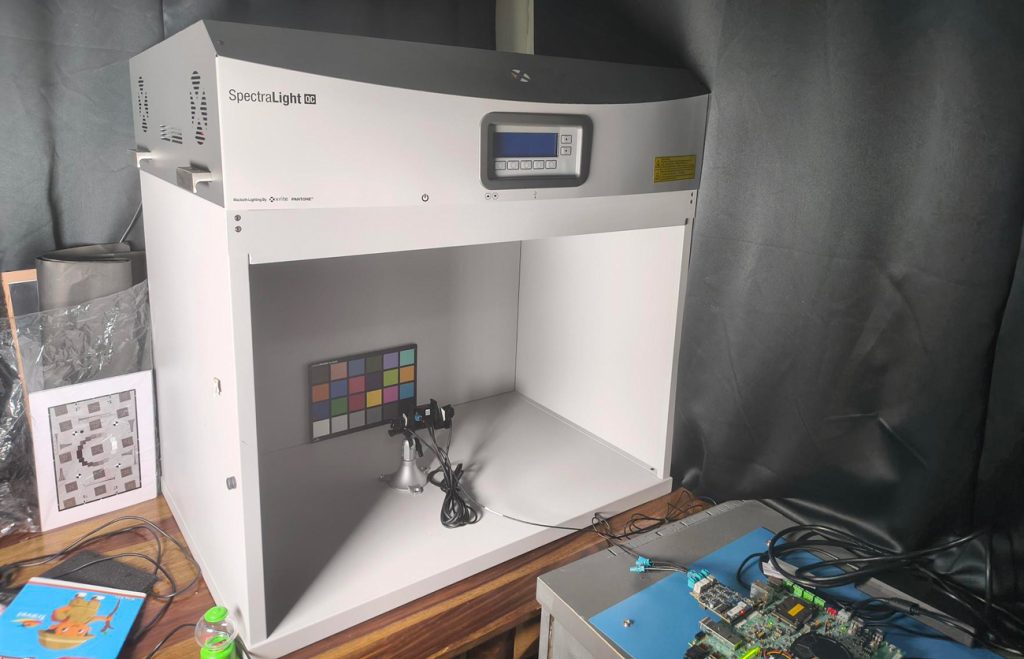
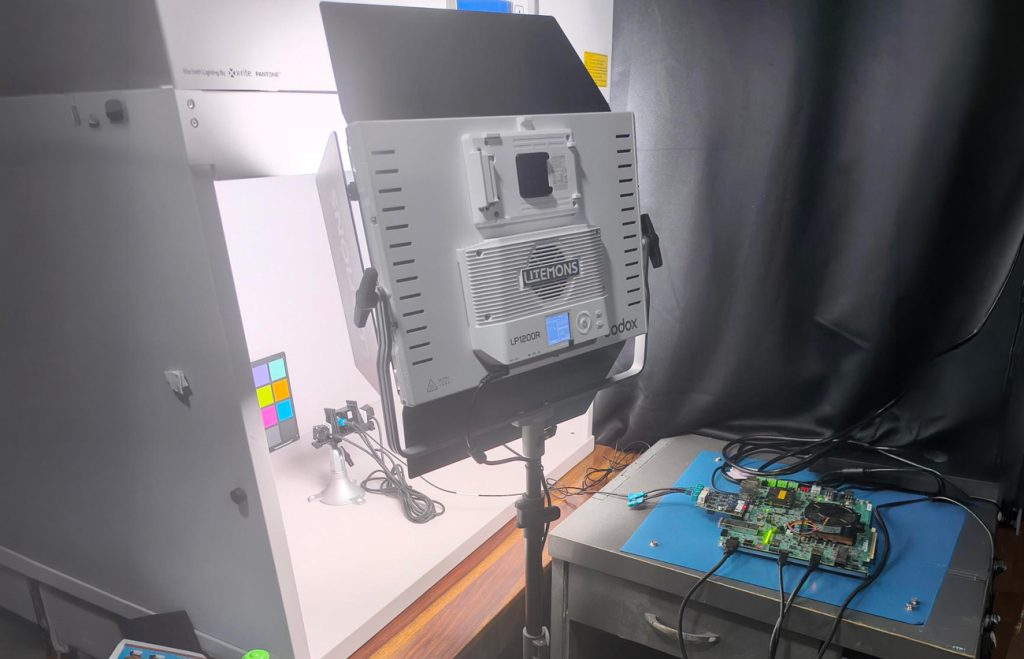
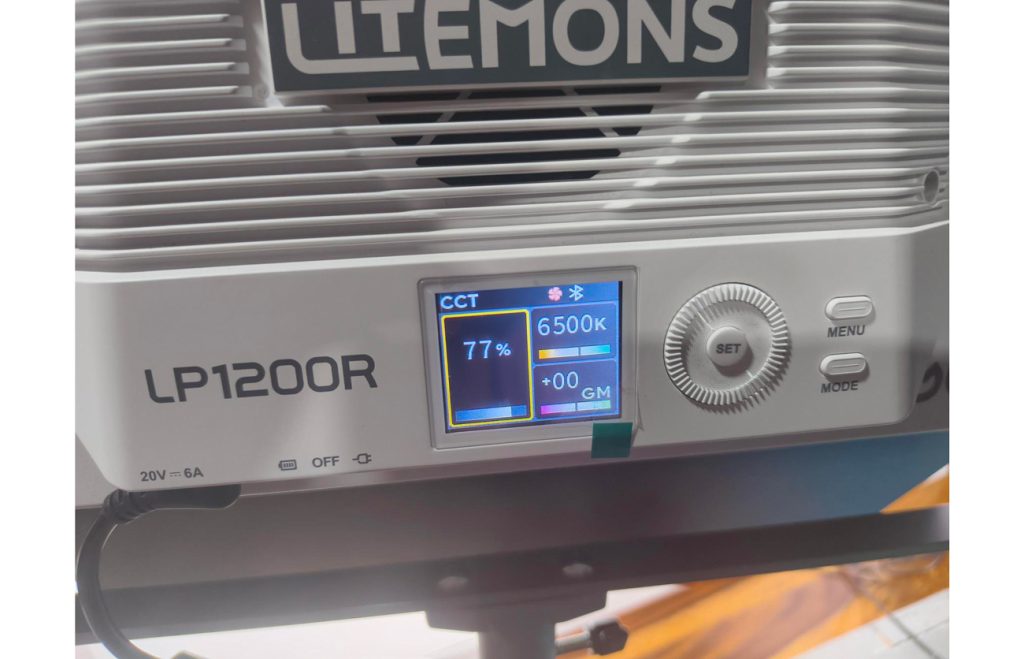
Our dedicated imaging laboratory is equipped with precision lighting environments, standardized testing charts, and controlled setups. We simulate the exact edge cases your product will encounter in the field, guaranteeing that your vision system performs flawlessly before deployment.
Frequently Asked Questions
1. I have a project and I have defined image quality metrics. Can you help me achieve them?
Yes. If you have already defined Image Quality (IQ) metrics, our team will utilize our controlled lab environments and advanced tuning architecture to systematically calibrate and tune your ISP pipeline. We map your specific requirements against objective measurements (such as Signal-to-Noise Ratio, dynamic range, color accuracy etc.) and iteratively fine-tune the 2A/3A algorithms and interdependent ISP blocks until your exact KPI targets are met.
2. I do not have defined IQ KPIs for my use-case. Can you help me in defining KPIs?
Absolutely. Image Quality KPIs vary drastically depending on the end application—a smart security camera has entirely different IQ requirements than an industrial inspection system or an automotive ADAS unit. Our vision experts will consult with your engineering and product teams to understand your operational environments, target SoC, and downstream AI or display needs to define realistic, high-performance KPIs tailored specifically to your product.
3. How long would it take for professional-grade IQ tuning?
The timeline for professional-grade IQ tuning depends on the complexity of the sensor, the target ISP, and the specific environmental requirements of your application. While a baseline calibration for a standard, controlled environment might take a few weeks, comprehensive, multi-condition tuning for complex edge AI or automotive use cases typically takes 4 to 8 weeks. However, our automated tuning frameworks and dedicated lab infrastructure significantly accelerate this process compared to traditional manual tuning methods and gets tuning done in DAYS
4. Can you customize ISP tuning to my use-case?
Yes, deep customization is at the core of our service. Standard, out-of-the-box ISP settings rarely suffice for specialized embedded applications. We customize every stage of the image pipeline—from lens shading correction and noise reduction profiles to precise dynamic range behaviors—ensuring optimal performance in your product’s specific operating environment, whether that involves extreme low light, high contrast, or rapid motion.
5. Can you do ISP tuning for both Human and Machine-Vision applications?
Yes, we provide specialized tuning pipelines for both domains. Tuning for human viewing (such as consumer displays or standard surveillance) prioritizes visually pleasing elements like natural color reproduction, smooth contrast, and reduced visual artifacts. In contrast, tuning for machine vision or Edge AI inference prioritizes maximum detail retention, high signal-to-noise ratio, and edge sharpness to guarantee that downstream computer vision algorithms operate with the highest possible accuracy.
6. What are the primary challenges in ISP tuning?
ISP tuning is notoriously complex due to the deep interdependence of the processing blocks; adjusting one parameter, like aggressive noise reduction, can instantly degrade another, such as fine detail sharpness. Additionally, calibrating dynamic 3A (Auto-Exposure, Auto-White Balance, Auto-Focus) algorithms to respond accurately under rapidly changing, non-uniform lighting conditions is highly challenging. Successfully bridging the gap between objective lab measurements and subjective real-world visual performance requires specialized engineering expertise and a rigorous, iterative testing framework.